Wireless Charging in Cars: The In-Vehicle Qi Revolution
Wireless charging in cars is transforming the daily drive. Learn how Qi and Qi2 work on the road, why certification matters, and what comes next.
Wireless Charging in Cars: The In-Vehicle Qi Revolution
The Cable That Will Not Stay Put
Anyone who has charged a phone during a drive knows the ritual: fish a cable out of the center console, plug it in, watch the phone slide off the seat, try again at the next red light. It is a small frustration, but it is one that repeats every single day for millions of drivers. In-car wireless charging was designed to end it.
The technology behind the wireless chargers now appearing in vehicle interiors comes from the Wireless Power Consortium (WPC), the organization responsible for the Qi standard. Qi has grown from a phone accessory into a fixture of modern life — it launched in 2010 and now covers more than 13,000 certified products worldwide. The car is one of the places where that growth is felt most directly.
How In-Car Wireless Charging Works
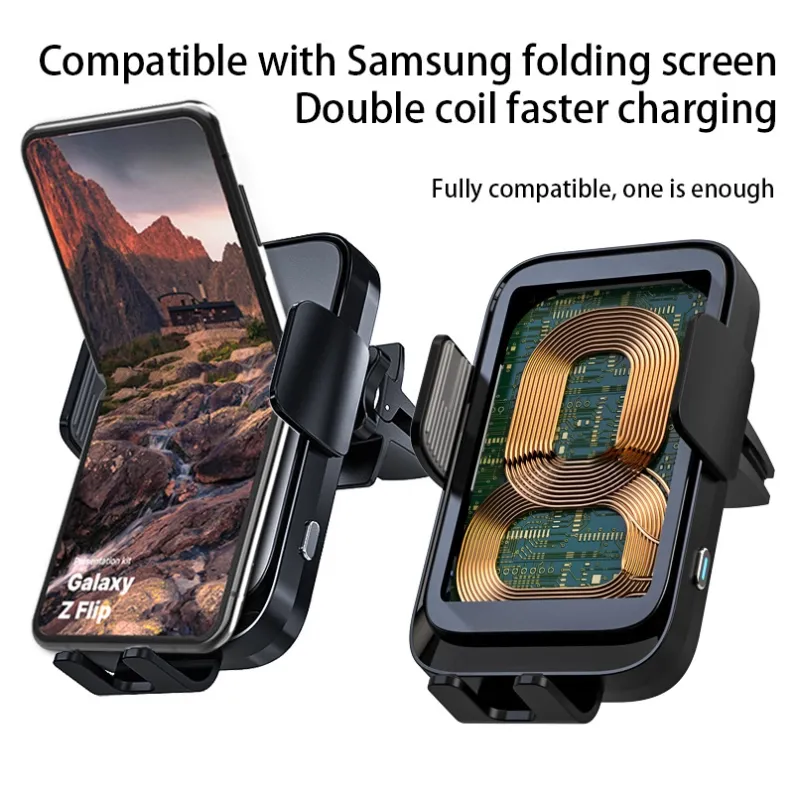
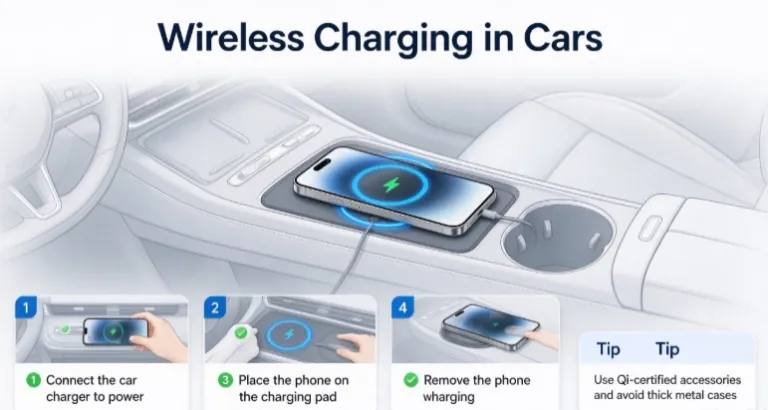
Wireless charging relies on magnetic induction. A transmitter in the vehicle and a receiver in the phone exchange energy across a magnetic field, so power flows without any metal contacts or cables. This is a near-field technology: the phone must be placed close to the charging surface, typically in a designated tray or pad.
The near-field design is exactly what makes wireless charging practical in a car. Because energy transfers only across a small gap, the system is safe and efficient, and it does not depend on the phone being in a precise location for the whole journey. Far-field approaches remain limited in commercial use due to concerns about cost, efficiency, and safety, which is why the near-field pad remains the standard approach in vehicles.
The Shift to Magnetic Alignment
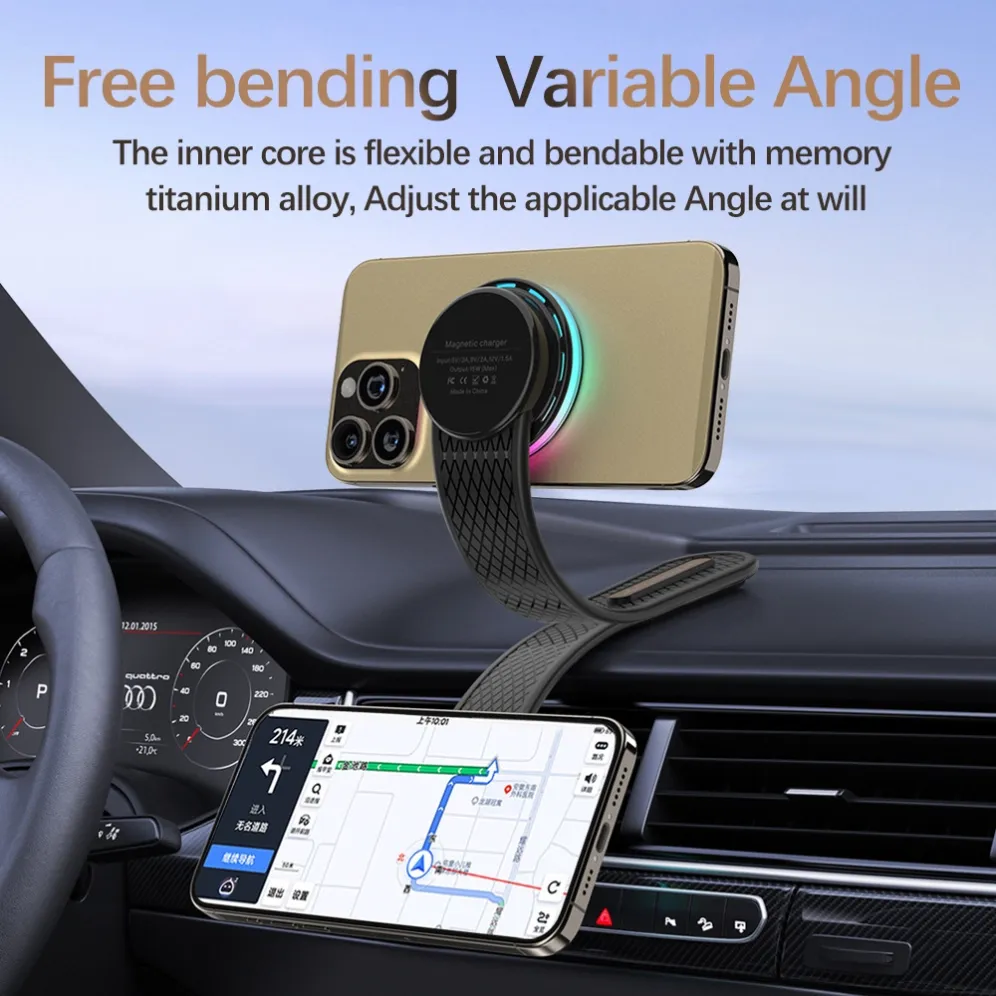
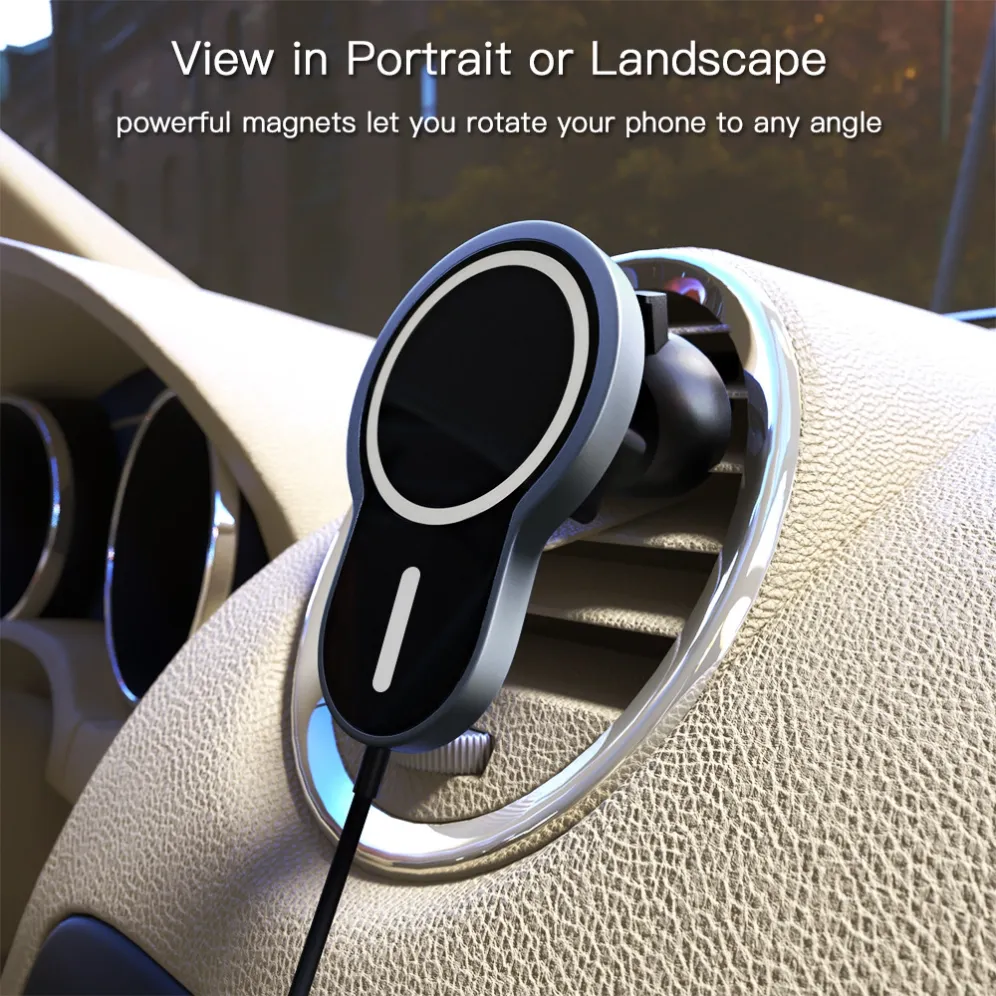
For years, one complaint dogged wireless charging: if the phone was even slightly off-center, charging could slow down or stop. The WPC addressed this directly with Qi v2.0, introduced in 2023, which added magnetic alignment and 15W charging. Magnets in the charger and the phone snap into the correct position, so the device stays aligned even as the car moves.
That single change matters enormously on the road. A car is a moving environment, and a phone that shifts in a tray can interrupt charging. Magnetic alignment keeps the connection stable, making wireless charging far more dependable during a drive. Qi v2.0 reached over 1.5 billion devices in its first year, a sign of how quickly the industry embraced it.
Qi2 25W and Faster Top-Ups
The next step arrived in July 2025, when the WPC's Qi v2.2.1 specification introduced Qi2 25W. This delivers nearly 70% more power than the first generation of Qi2 and can take a device from empty to 50% in roughly 30 minutes. For drivers, that speed changes the calculus: a short commute or a quick errand can now add meaningful charge instead of just holding the battery steady.
Faster charging fits neatly with how batteries actually age. Limiting the depth of discharge — stopping at 50% rather than draining to 100% — can improve battery lifespan by roughly four times, and small, frequent top-ups are gentler on a battery than deep cycles. A car charger that adds power during routine drives supports exactly this kind of steady, low-stress charging.
Why Safety and Certification Matter on the Road
A vehicle is a demanding environment for any electronic device, which is why the WPC's guiding principles — safety, efficiency, and interoperability — are especially relevant in the car. Certification is how those principles are enforced. Products are evaluated by independent, authorized test labs, and only certified products may carry the relevant logo. Only WPC members can apply for that certification, and the process averaged about 24 days in 2026.
Security Built Into the Standard
The WPC also builds security into its specifications. Qi 1.3 and Qi 2.0 require Extended Power Profile (EPP) and Magnetic Power Profile (MPP) chargers to include a public key certificate, a form of PKI authentication. That certificate helps confirm that a charger is genuine and safe to use, which is a meaningful reassurance in a car where a device may be charging unattended.
Where In-Vehicle Charging Is Heading
The trajectory is clear. Qi2 25W brings more speed, magnetic alignment brings more reliability, and certification brings trust. Looking further ahead, the WPC notes that wireless power is being explored for areas such as AR/VR headsets and magnetic accessories — technologies that will increasingly travel with us in the car.
Public charging is advancing in parallel. WPC members have already installed Qi-certified chargers in thousands of restaurants, hotels, public transport hubs, and coffee shops worldwide, and with the spread of Qi2 and Qi2 25W, the organization expects public wireless charging to become common even faster. The car is not an isolated island; it is part of a growing web of places where a phone can simply rest and recharge.
FAQ
Will any phone charge wirelessly in a car?
In-car wireless charging works best with Qi-certified devices and chargers, which are designed to be interoperable. Magnetic alignment, introduced with Qi v2.0, helps keep compatible phones in the correct position while driving.
Is in-car wireless charging slower than a cable?
Charging speed depends on the charger and device. Qi2 25W, introduced with the Qi v2.2.1 specification in July 2025, delivers nearly 70% more power than the first generation of Qi2 and can reach 50% charge in roughly 30 minutes.
Facts sourced from the Wireless Power Consortium.