Oct 12, 2026
What Actually Determines Smart-Glasses Adoption: Waveguides, Light Engines, and Fashion
What Actually Determines Smart-Glasses Adoption: Waveguides, Light Engines, and Fashion
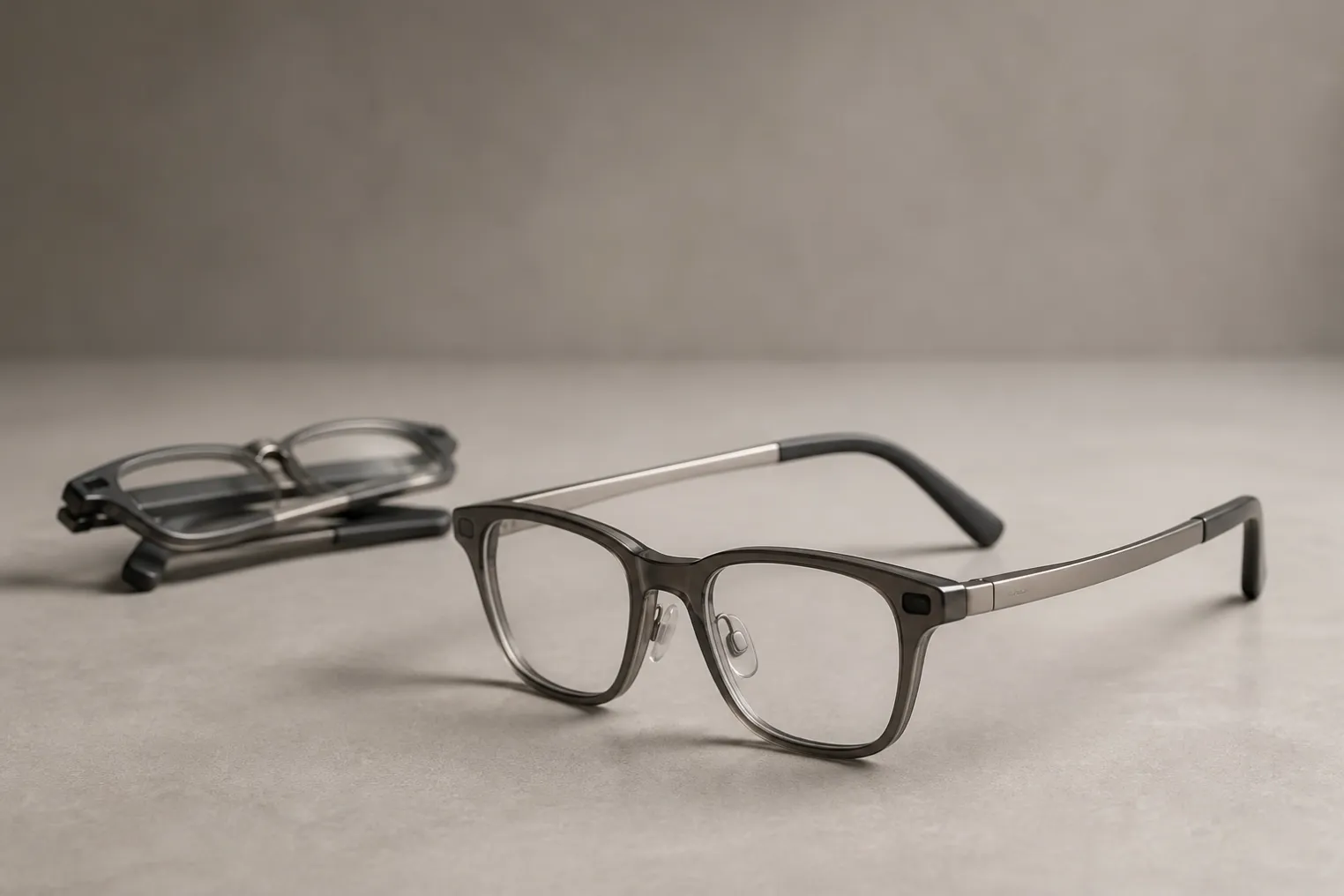
In short: The technologies that decide whether smart glasses reach the mainstream are optical rather than computational. Waveguide combiners and display engines set the achievable field of view, brightness, and weight, while the frame still has to satisfy eyewear buyers who rank appearance above digital features. Today's products split into AI eyewear with no display and genuine augmented-reality prototypes built around waveguides.
How did head-mounted displays begin, and why did early attempts fail?
Head-mounted display work long predates today's AR boom. In early-1960s Texas, Bell Helicopter tested a pilot-controlled night-vision concept in which an infrared camera under the aircraft fed a headset showing an augmented view of the ground, and Ivan Sutherland built an experimental pilot headset plus a second device nicknamed "The Sword of Damocles." Morton Heilig patented a "Stereoscopic Television Apparatus for Individual Use" — the roughly two-pound Telesphere Mask, combining 3D television, stereoscopic sound, and effects such as wind — and he also built the Sensorama simulator. Google Glass arrived in 2013 and failed: expensive, limited, and unappealing.
What are the two enabling technologies behind current smart glasses?
Adoption rests on waveguides and display engines. A waveguide is a micron-thin glass wafer that routes light using tiny grating structures patterned on its surface, and a display engine projects a high-intensity beam into it to form an image before the eye. Vuzix, which supplies the waveguide technology for XanderGlasses, works on shrinking the waveguide while improving the light engine, and dozens of suppliers provide combiners, projection modules, and integrated optical engines.
How do display-free AI eyewear and true AR glasses differ?
Ray-Ban Meta glasses carry no display. They are AI-integrated for tasks such as real-time translation and pair microphone arrays with high-fidelity audio; users can make calls, listen to music, and capture 12-megapixel ultrawide photos and videos that livestream to social platforms, with a case that also charges them. Meta's Jason Hartlove says the partnership showed what product-market fit looks like for a wearable compute device. Meta's Orion prototype adds a display: a wide field of view capable of more than 70 degrees, silicon carbide waveguides, an advanced micro-LED projector, embedded eye tracking, active dimming, and assorted sensors and on-board cameras, all under 90 grams.
Aspect | Ray-Ban Meta (as described) | Orion prototype |
|---|---|---|
Display | none | micro-LED projector through waveguides |
Field of view | not applicable | more than 70 degrees |
Waveguide material | not applicable | silicon carbide |
Weight | not stated | under 90 g |
Planned price | not stated | |
Why does the refractive index of the waveguide material matter?
High-index material expands the usable field of view. Orion depends on silicon carbide with a refractive index above 2.6, which Hartlove calls a critical enabling technology for an ultrawide experience. Other work targets a brighter micro-LED light engine and the harder problem of fitting custom eyepieces to different styles, frame sizes, and prescriptions.
Does fashion really outrank digital features?
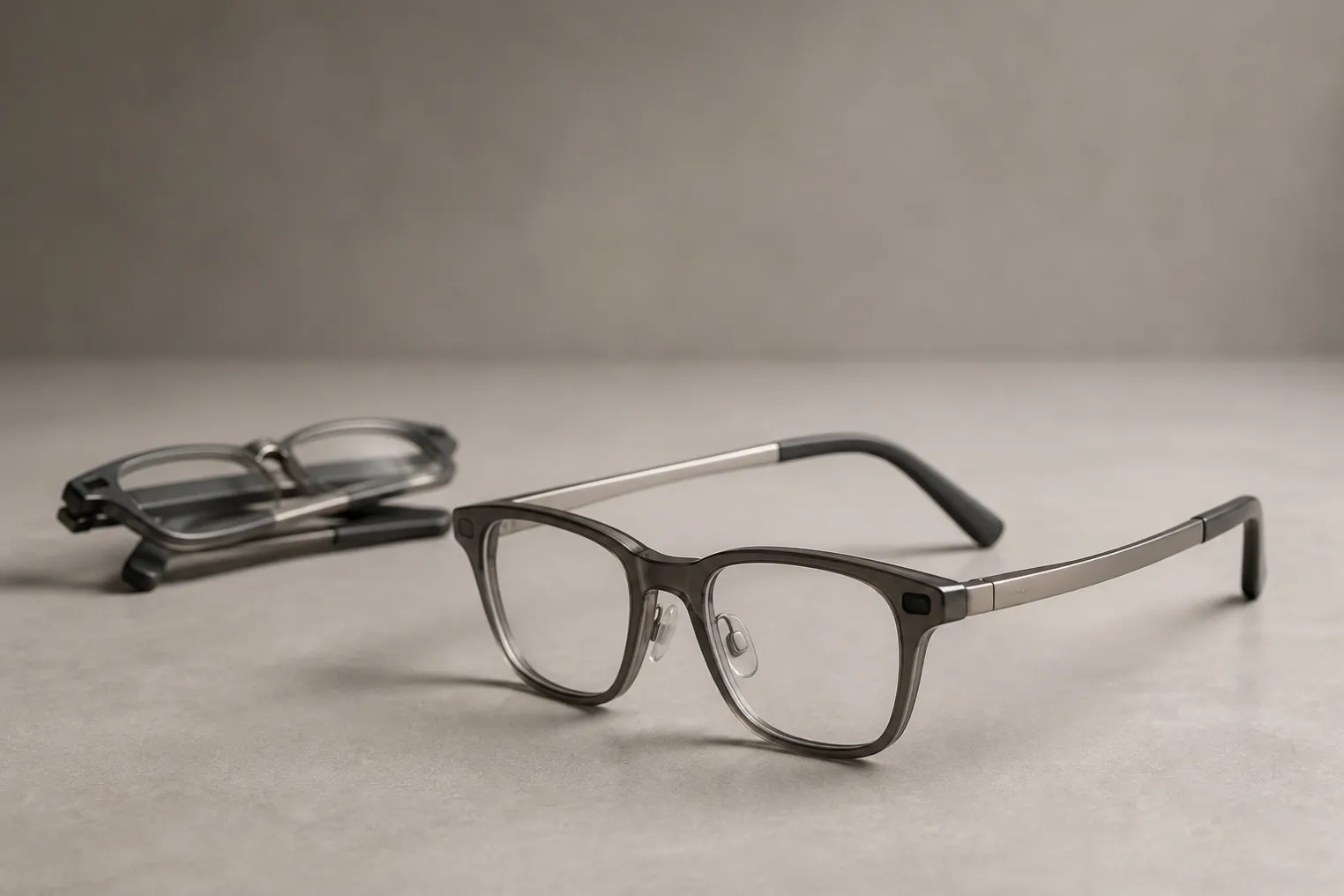
For many buyers it does. Bernard Kress, who chairs the SPIE AR|VR|MR conference, ranks fashion first, prescription integration second, and digital functionality third, noting that a small on-lens cue — an arrow, a caption, or a location marker — is genuinely useful at the right moment. About 60 percent of the population needs some vision correction, and Kress points out that buyers already weigh hundreds of dollars against a cheap pair of drugstore readers. Mordor Intelligence puts the global sunglasses market at 34.34 billion by 2030, with fashion cited as a leading growth driver.
Who supplies the hardware versus the platform?
Google no longer develops smart-glasses hardware; it is building Android X, a smart-glasses platform, with hardware coming from partners such as Samsung, XREAL, Sony, and Lynx Mixed Reality. Kress notes that such glasses pair with a phone over low-power Bluetooth to reach cloud services, which keeps the headset itself lean.
FAQ
Do smart glasses on sale today actually display images?
Not all of them. The widely marketed Ray-Ban Meta hardware has no display and concentrates on audio, cameras, and AI assistance. Display-based devices such as the Orion prototype exist, but they are presented as prototypes or future products.
What field of view does Meta's Orion prototype claim?
It is described as capable of a wide field of view of more than 70 degrees, enabled by silicon carbide waveguides. That wide-field capability is presented as its central optical advantage.
Why did Google Glass not become a mass product?
It launched in 2013 but failed shortly after for three stated reasons: it was expensive, its functionality was limited, and it was not appealing to wear. That lesson shaped the design-first approach of later products.
How much is Meta planning to charge for Orion?
Stated plans place Orion at a 1,200 price point, a range compared to that of a personal computer. It has not been positioned as a low-cost accessory.
References
- SPIE Photonics Focus, "Getting smart about smart glasses," July 2025 — https://spie.org/news/photonics-focus/julyaugust-2025/getting-smart-glasses